Begin with the view you actually use
Stand at the doorway, then sit where you expect to drink your morning coffee. These viewpoints reveal different compositions. A shape that looks balanced straight on may disappear behind a chair when seated. Mark the visible area on a paper sketch before deciding where a mural begins and ends. Include doors, vents, lights and plant growth rather than drawing an imaginary blank wall.
Choose a single intention: to frame a plant, warm a shaded corner or make a narrow wall feel more generous. That intention will help you reject attractive but unrelated ideas. A mural does not need a landscape or an intricate illustration. One offset circle, a loose botanical line or a broad vertical field can give the wall a recognisable identity.
Borrow a principle, not a whole picture
Look at the broad planes of colour associated with Luis Barragán, the spare geometry of Ellsworth Kelly or the cut-paper rhythms of Henri Matisse. The useful lesson is not to reproduce a famous work. Notice instead how a few shapes establish direction, contrast and stillness. Translate that principle into an original arrangement suited to your own wall.
Keep the number of gestures small. On a compact balcony, fine detail often becomes visual noise behind leaves and furniture. Draw your idea at thumbnail size: if its main shape still reads clearly, the composition has a strong foundation. Then make a paper template or a measured sketch before committing paint to the wall.
Ask what the wall can safely receive
Permission comes before preparation. Check your lease, building rules and any local restrictions on exterior alterations. A balcony wall may be part of a shared facade or a waterproofed assembly, even when it feels private. Do not drill, strip coatings or paint over vents, joints, drainage outlets or safety notices. Where the substrate or existing finish is uncertain, ask the building manager or a qualified contractor.
For a permitted project, identify whether you are working on masonry, render, timber or a previously coated panel. Choose an exterior coating system approved by its manufacturer for that surface. Follow the product instructions for cleaning, drying, primer, temperature and curing. Persistent damp, loose render or recurring cracks need assessment rather than a decorative cover-up.
| Surface | Before painting | Care note |
|---|---|---|
| Sound masonry or render | Confirm coating compatibility and moisture condition. | Inspect for flaking and moisture after wet weather. |
| Exterior timber panel | Use an approved primer and finish; follow edge-treatment instructions. | Check edges and fixings as the timber moves. |
| Removable art panel | Confirm outdoor rating, weight and safe support. | Store indoors if the panel is not weather-resistant. |
Test colour at real scale
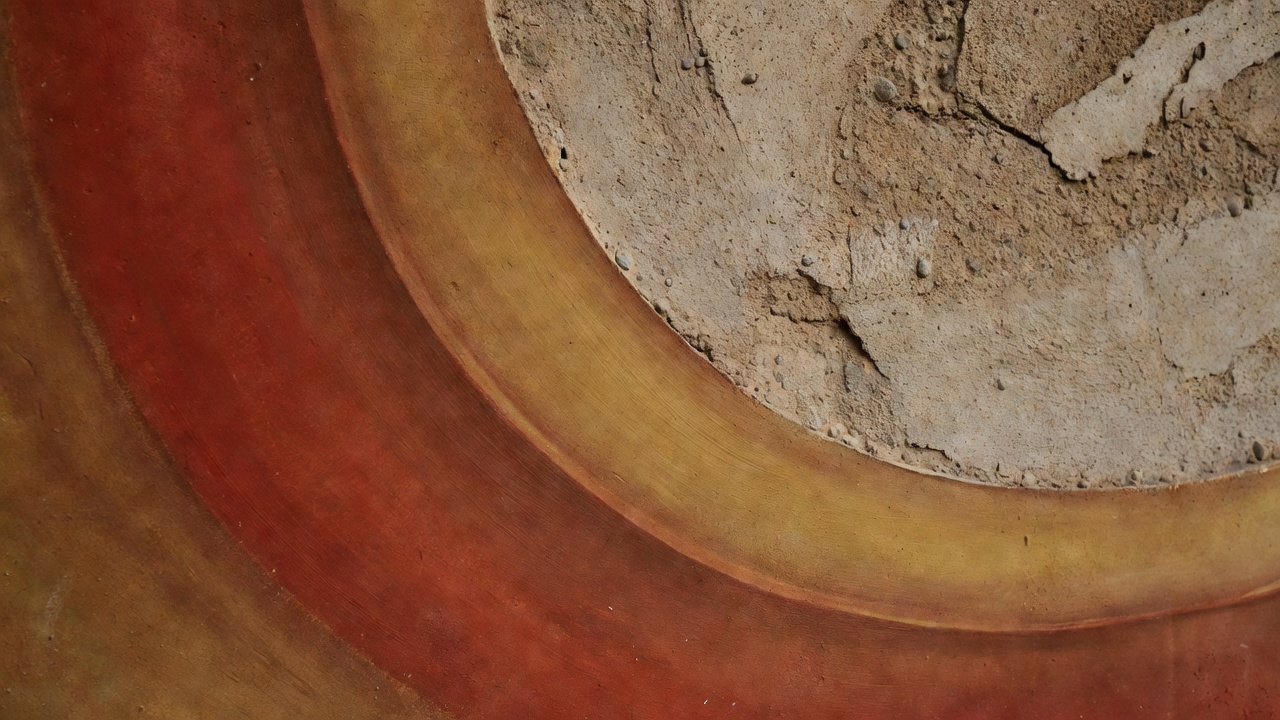
Paint a generous sample on an appropriate test board using the intended primer and finish. Move it through the space and inspect it in morning light, afternoon shade and artificial light. A warm pale tone can feel luminous beside burgundy but appear flat against a cream wall. Your existing floor, railing and foliage are already members of the palette.
Keep one colour dominant and let another do a smaller job. A champagne line crossing a clay field may be enough. Repeat that light note once in a planter or cushion so the wall belongs to the whole balcony. Avoid adding a new accent simply because an unused paint tin is available.
Make the process quiet and manageable
Clear a safe working area and protect floors, plants and neighbouring property from drips. Keep every tool inside the balcony boundary. Do not lean over a guard or improvise access to an unreachable surface. If the design requires unsafe reach, reduce its scale or use professional help. Consult the paint’s safety information and keep ventilation appropriate to the product.
After curing, clean only as the manufacturer recommends. Photograph the finished mural and record the paint name, finish and colour reference for later touch-ups. Revisit the composition when your plants grow: pruning or moving one pot may restore the original balance more effectively than repainting. A good wall treatment remains a framework for living things, not a demand that everything stay still.