Decide what the object contributes
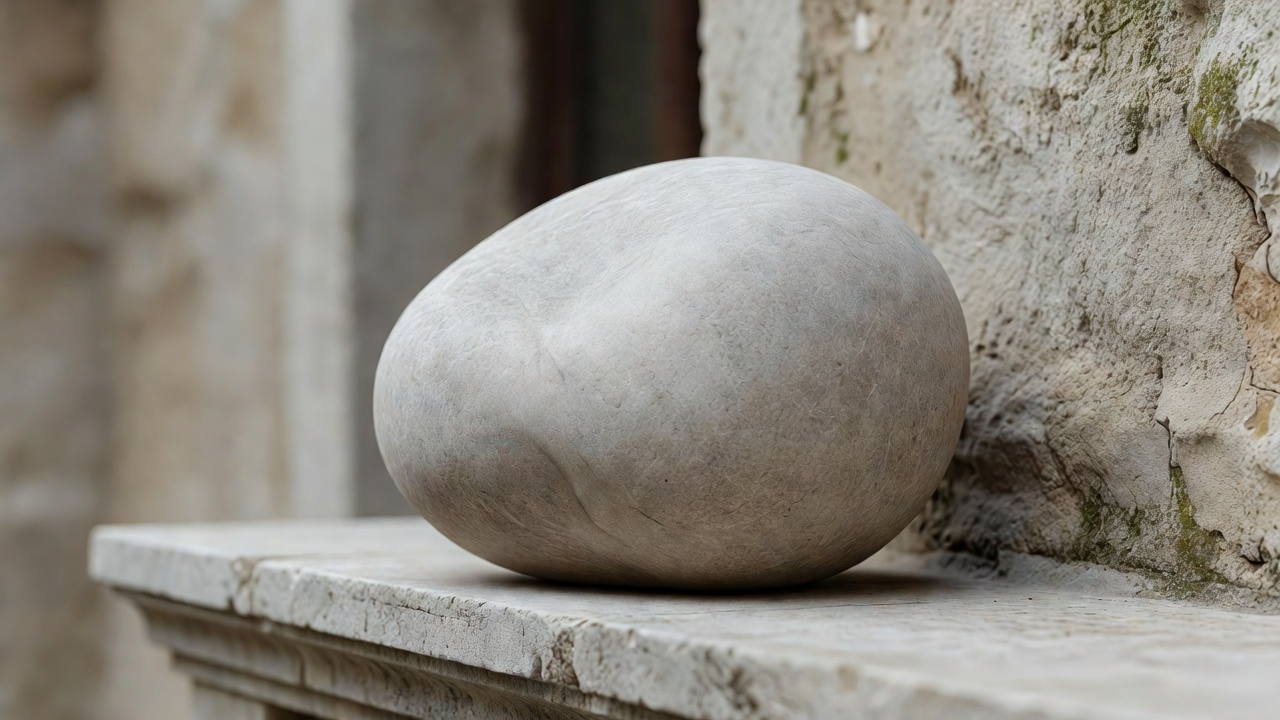
A sculptural accent does not have to be large or expensive. It needs a clear role. A rounded form can soften a balcony full of straight rails; a spare vertical shape can punctuate broad foliage; an open loop can frame a glimpse of a painted wall. Begin with the relationship you want, not with the urge to fill an empty corner.
Describe your existing arrangement in simple terms: upright, low, dense, airy, rough, smooth. Choose a form that adds one useful contrast. If every object is already visually active, the best sculptural addition may be a quiet, undecorated piece. If the space feels too uniform, an unexpected silhouette can introduce the necessary change of pace.
Look at sculpture as a lesson in space
Barbara Hepworth’s work offers ways to notice openings and the relationship between solid form and air. Isamu Noguchi’s sculpture and gardens suggest how an object can belong to its surroundings rather than sit on top of them. Constantin Brâncuși’s simplified forms demonstrate how much character can survive the removal of detail.
For outdoor viewing, the Yorkshire Sculpture Park and the Henry Moore Studios & Gardens offer useful references for observing changing viewpoints and the space around a work. These are sources of looking, not templates for imitation or endorsements of this site. On a balcony, translate the lesson into modest scale: leave a visible interval around your chosen piece.
Test proportion without committing
Use a cardboard silhouette indoors to estimate scale before buying or making an object. View it through the doorway and from your chair. A piece that looks substantial in a close-up photograph may become visually lost behind a pot. Conversely, a tall form may interrupt a valued view or make a small space feel compressed.
Compare the sculpture with the objects immediately beside it. Avoid lining every top edge at the same height unless you want a deliberately formal rhythm. A low form beside a taller plant can create an easy hierarchy. Keep the test material indoors or under direct control; light mock-ups must never be left loose on a windy balcony.
Choose materials for exposure, not only appearance
Stone, metal, ceramic and timber each change differently outdoors. Stone can stain or chip; ceramics can absorb water; some metals corrode or leave marks; timber moves as moisture changes. A weathered appearance may be desirable, but deterioration that weakens a support or creates sharp edges is not simply patina. Ask the maker what change is expected and what signals damage.
Pay attention to contact between materials. Moisture trapped beneath a base can affect flooring, while corrosion products can stain nearby surfaces. Use a support system suitable for the object and the balcony finish, without blocking drainage. Do not add a sealant just because it is available: an incompatible coating can alter appearance or create maintenance problems.
| Material | Ask before placement | Watch over time |
|---|---|---|
| Stone or cast mineral | Is the weight appropriate for this location and support? | Cracks, rocking and staining beneath the base. |
| Metal | What exterior finish and maintenance are specified? | Corrosion, loose connections and runoff marks. |
| Ceramic | Is this piece suitable for rain and frost? | Water collection, glaze damage and new cracks. |
| Timber | Is the species and finish suitable outdoors? | Splits, movement and weakened fastenings. |
Placement is a safety decision
Keep objects fully inside the balcony boundary and away from guard tops, exposed ledges and door swings. A broad silhouette can catch wind even when the material feels heavy. Do not invent a ballast or attachment system for an uncertain object. Where anchoring, structural loading or wind resistance needs assessment, consult the building manager and an appropriately qualified professional.
Avoid creating climbing steps near guards, especially where children may be present. Keep escape routes, drains, vents and access points clear. Hanging pieces need particular care: building permission, suitable supports and rated connections cannot be replaced by a decorative cord. If a piece cannot be displayed safely, let it remain an indoor object.
Let the arrangement change slowly
Photograph the composition from your usual viewpoint, then remove one nearby accessory. Does the sculpture become more legible? Turn the piece slightly, if it can be handled safely, and notice how its shadow changes. A small adjustment can reveal a form more effectively than adding a spotlight or another object.
Make a seasonal inspection part of plant care. Look for unstable feet, softened supports, water pockets and new surface damage. Bring vulnerable pieces inside before severe weather. The goal is not to freeze a perfect arrangement; it is to maintain a thoughtful relationship between form, growing plants and open space as conditions change.