Start with a silhouette, not a shopping list
Look at your balcony from the doorway and imagine the plant as a soft shape. What vessel would give that shape a useful counterpoint? Upright grasses might suit a generous rounded pot; trailing growth can sit well above a quieter, straighter-sided form. The aim is not a rigid rule but a relationship you can see clearly from your normal viewing position.
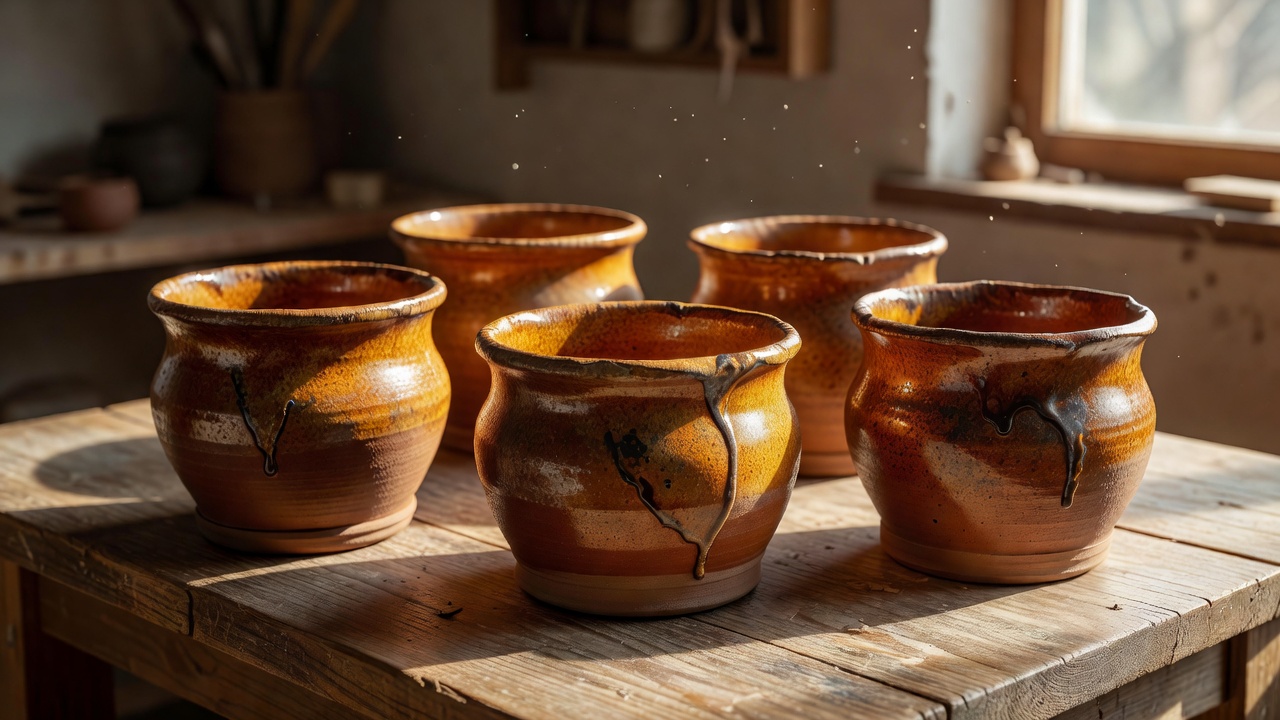
Choose one vessel to lead. Its character might come from a pinched rim, a brushed slip surface or a deep clay body left partly exposed. Supporting pots can be simpler. When every container has an emphatic pattern, unusual outline and different glaze, the plants have to compete for attention. A small family of related forms usually leaves more room for personality.
Learn to read the material
Terracotta often offers warmth and a porous surface, while stoneware can provide a denser body and a wide range of glazes. Neither label alone proves that a pot will withstand freezing weather. Firing, water absorption, glaze fit, drainage and the maker’s testing all matter. Ask for specific outdoor guidance rather than treating a glossy finish as a weatherproof seal.
Useful references for looking closely include the vessels of Lucie Rie, the studio traditions of Bernard Leach and the ceramic collections at the Victoria and Albert Museum. Study the balance between body, foot and rim rather than trying to imitate a signature piece. Contemporary makers can explain how those same decisions affect planting volume, stability and handling.
Make the handmade gesture achievable
If you want to make a ceramic planter, a supervised pottery studio offers access to appropriate clay, tools, glazing knowledge and kiln firing. Tell the tutor that the piece is intended for outdoor planting. Plan drainage and a stable base while the clay is workable. Do not assume that a first project will be frost-resistant simply because it has been fired.
For a simpler starting point, decorate an existing sound pot with a finish explicitly suited to its material and exterior exposure. A restrained band, irregular vertical brush marks or one contrasting rim can be enough. Follow preparation and curing instructions, and keep drainage holes open. Ordinary air-dry craft clay is generally a poor choice for an exposed, permanently planted outdoor container unless a specific product is rated for that use.
| Vessel | Useful role | Care question |
|---|---|---|
| Unglazed terracotta | A warm, quiet anchor for foliage. | How quickly does it dry, and can it remain outside in frost? |
| Glazed stoneware | A more expressive focal pot. | Has the maker rated this specific piece for outdoor conditions? |
| Decorative cachepot | A removable outer layer around a nursery pot. | Can trapped water be emptied easily after watering or rain? |
| Lightweight composite | A lower-weight alternative with a sculptural outline. | Is it UV-resistant, stable and approved for exterior use? |
Let drainage do its real job
A planted container needs a suitable escape route for excess water. A layer of stones is not a substitute for drainage holes. Use a growing medium appropriate to the plant and container, and check that roots or debris have not blocked the outlets. A decorative outer pot can conceal a nursery container, but water must not accumulate unnoticed inside it.
Protect the floor without obstructing balcony drainage or allowing standing water to damage finishes. Empty saucers when needed and follow local guidance on runoff, especially above neighbours. Do not drill a finished ceramic pot casually: it may crack, create sharp edges or produce hazardous dust. Ask the maker whether modification is possible, or choose a container already designed for planting.
Consider the weight you cannot see
A pot’s empty weight is only part of the picture. Wet growing medium, retained water and mature plants add to the load. Before assembling large containers or dense groups, ask the building manager or a qualified structural professional about the balcony’s limits and appropriate placement. Generic online loading figures cannot establish the capacity of a particular balcony.
Keep heavy vessels low and safely inside the boundary. Do not perch them on rails, raise them on unstable stacks or place climbable arrangements beside guards. Leave enough access to lift a liner, inspect drainage and care for the plant without awkward reaching. A beautiful pot that cannot be maintained comfortably is not yet a successful design.
Allow a little weather, but recognise damage
A soft mineral mark or uneven patina can belong to the character of a vessel. New cracks, flaking finishes, sharp edges or instability deserve a different response: remove the pot from service and assess it. Bring uncertain ceramics indoors before freezing conditions, and store them clean and dry. Seasonal rotation can become part of the composition rather than a compromise.
Finish by repeating one detail elsewhere: the clay tone in a woven seat, the pale glaze in a wall line, or the vessel’s curve in a small sculpture. That connection makes a handmade pot feel intentional. It is no longer an isolated decorative purchase; it has become a useful participant in the balcony’s visual language.